
Teaching is Legacy: Janice and Brook LaFoe, Honoring Culture, Leading with Innovation, Empowering Indigenous Learners
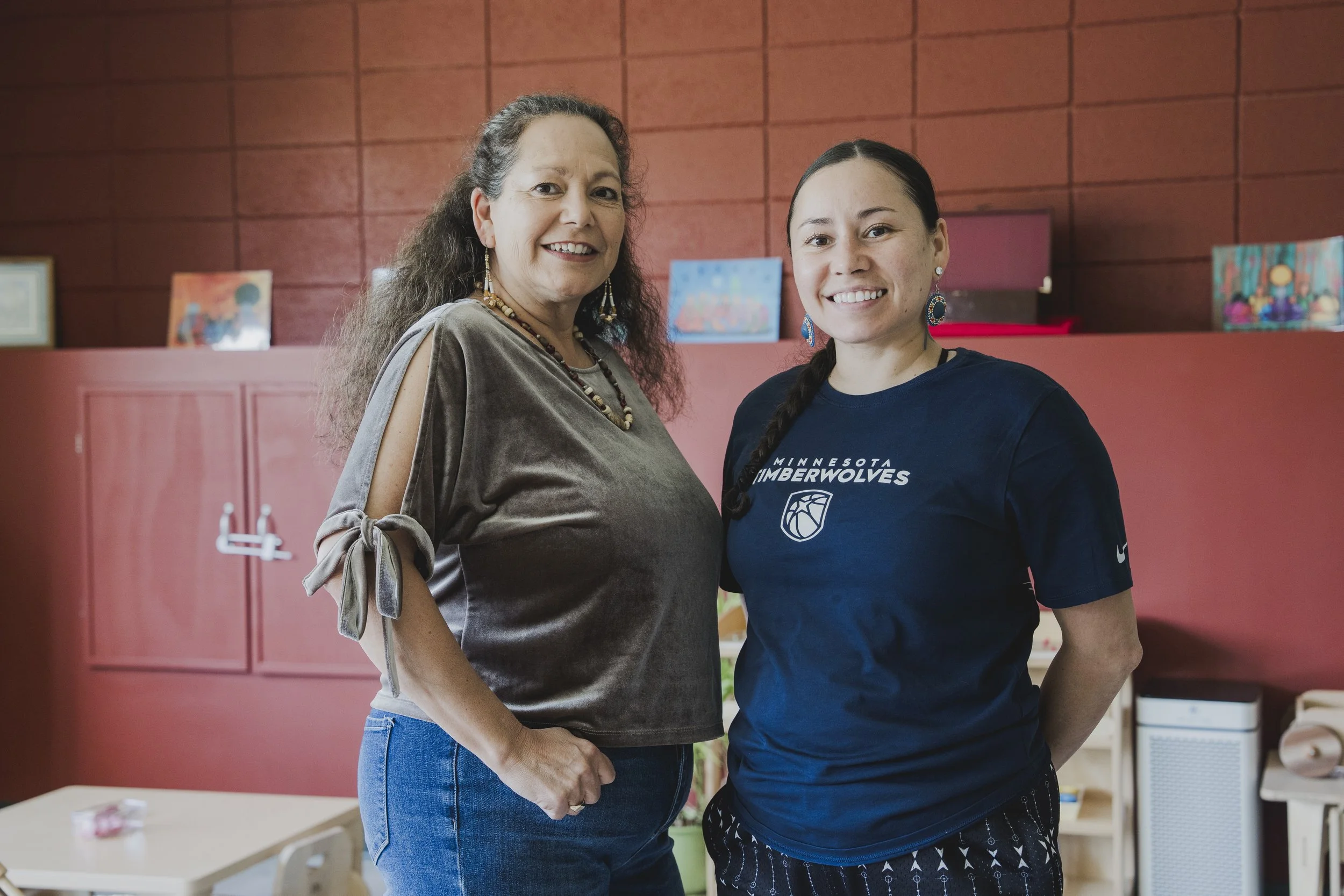
Mother-daughter powerteam educators: Janice and Brook LaFloe
Janice and Brook LaFloe are a mother-daughter team dedicated to advancing Indigenous education through cultural revitalization, community leadership, and child-centered learning. Together, they bring an intergenerational perspective to their work—merging tradition, policy, and innovation to support Native families.
Janice LaFloe, Executive Director of Montessori American Indian Childcare Center (MAICC) and a member of the Turtle Mountain Chippewa Tribe, has served Native communities in St. Paul for over a decade. With degrees in Political Science and Public Policy, and Montessori training as a Bush Foundation Leadership Fellow, Janice blends advocacy and education to create culturally grounded spaces for early learning.
Brook LaFloe, Associate Director and co-founder of Niniijaanis One of Ones, is an educator and entrepreneur with a background in neuroscience, anthropology, and Montessori. With two Association Montessori International (AMI) diplomas and a passion for material making, beadwork, and youth mentorship, Brook continues her mother’s legacy while shaping new pathways for Indigenous children to thrive.
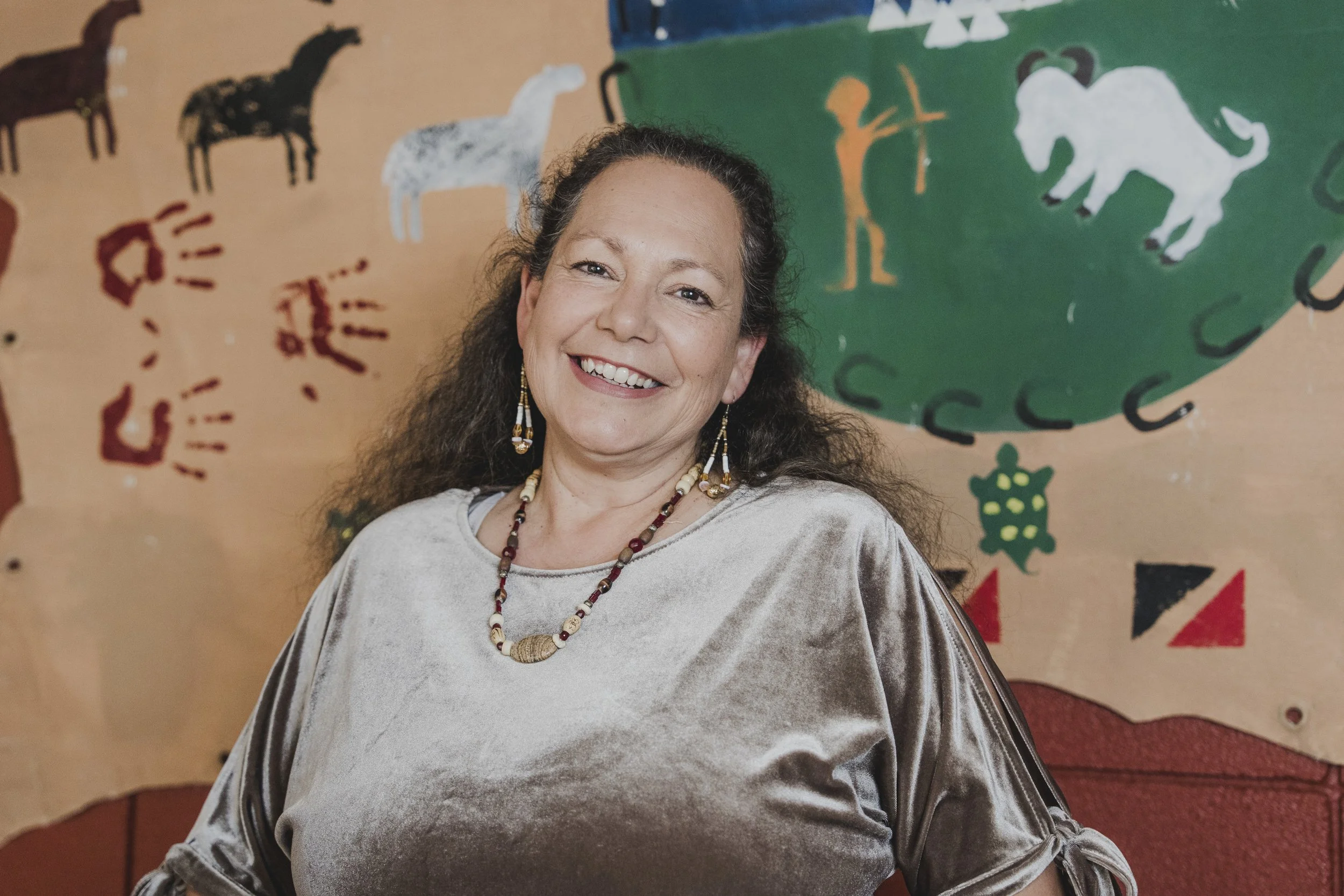
Janice LaFloe
You founded MAICC with a powerful vision. What inspired you to start this center and how has your journey as a founder evolved over time?
Janice LaFloe: I was inspired to open our own Montessori school for the American Indian community due to my experience with my youngest son. We enrolled him in a Montessori as a toddler. And the grace and respect and care that they showed him was so beautiful, it inspired me to learn more about Montessori school. During my research I began to recognize the philosophical alignment to our own Indigenous cultural values and so a big part of that in my life at the time I was also exploring my options for opportunities. and I had sought out a Bush Foundation Leadership Fellow and was awarded. So, the stars aligned for me to be funded to concentrate on that work.
How has your background in public policy and political science shaped your leadership and advocacy for early childhood education within the American Indian community?
Janice LaFloe: My background in political science and public policy gave me a critical foundation for understanding how systems work—how decisions are made, how communities are funded, and how to advocate effectively using data. But just as important was my professional experience. Over nearly 20 years working in Indian education and with the American Indian Family Center, I saw firsthand the challenges Native children and families face, especially in the East Metro. That experience taught me how to build, fund, and deliver programs that address real gaps. Founding the Child Care Center was a natural next step—focusing on early childhood, where one of the most urgent needs remained. Ultimately, my professional journey shaped me as much, if not more, than my formal education.
What did your experience as a primary guide in the Children's House teach you about the young children, about what young children truly need to thrive?
Janice LaFloe: One of the most humbling and meaningful roles I've had is serving as a primary guide. Truly following the child—understanding where they are and how to meet their needs—is essential. Our work begins by creating safety and trust through the "circle of security" approach, building strong, reciprocal relationships with each child. That trust forms the foundation for child-centered learning, which looks different for every child. Over the years, I’ve walked alongside children for two to three years, watching them grow from age three to five, and guiding them toward readiness for elementary school.
As a guide, my role is to nurture curiosity and help children connect deeply with their cultural identity. We foster pride in who they are—Ojibwe from Red Lake, Dakota from Prairie Island—and embed cultural teachings and values into every part of their learning. These stories and traditions are just as critical as academics in building a strong sense of self. For children to thrive, they must first feel safe and secure in a trusting relationship, which then opens the door to meaningful learning and identity development.
It took time—especially my first full three-year cycle—to fully grasp and appreciate how children grow and what they need from me. Early on, I doubted my abilities, but I grew more confident by learning to apply our cultural methods consistently and rhythmically. Of course, we also face practical challenges—meeting licensing requirements, navigating paperwork, and managing systemic barriers—but I try to shield the classroom from those pressures. Educational sovereignty remains a core value for me: the right to shape our children's learning in ways that honor and reflect who they are.
“As a guide, my role is to nurture curiosity and help children connect deeply with their cultural identity. We foster pride in who they are—Ojibwe from Red Lake, Dakota from Prairie Island—and embed cultural teachings and values into every part of their learning. These stories and traditions are just as critical as academics in building a strong sense of self. For children to thrive, they must first feel safe and secure in a trusting relationship, which then opens the door to meaningful learning and identity development.”
What does leadership mean to you within an indigenous framework?
Janice LaFloe: The Montessori method, developed by Dr. Maria Montessori in the early 1900s, is a holistic, child-centered approach that aligns closely with Indigenous values. It emphasizes guiding rather than instructing children, honoring each child’s unique developmental journey. This approach supports strong foundations in social-emotional growth, cultural identity, and academics—children often leave reading by age six and with a deep love for learning.
While Montessori is widely used and respected, it’s not a one-size-fits-all model. We respect tribal sovereignty and believe each community should adapt the method in a way that reflects their own language, culture, and values. For example, our partners at Cochiti Pueblo, Kere's Child Children’s Learning Center use Montessori in ways unique to their small, first-language-speaking community.
Our goal isn’t to impose, but to offer access and support to any tribe that wishes to integrate Montessori. At the core, what unites our work is the deep belief that our children deserve the very best.
What advice would you give to Indigenous educators or leaders who want to create community-rooted institutions like MAICC?
Janice LaFloe: To remember that at the heart of our work are our children and our families. And only when we recognize that that work is a team work. can we truly thrive as a community. I recognize that what I do with the children all day is awesome, but only when it's reinforced and met by parents who appreciate and can contribute back and by that I mean that those households first of all value what we're doing together and then they work really hard at taking care of their child. Having those regular routines at home are critical.
As someone who bridges neuroscience, anthropology, and education, how do you integrate these disciplines into your work with young children?
Brook LaFloe: Representation matters—our kids need to see successful Native adults, especially Native women, to imagine that success for themselves. That visibility is crucial for healthy brain development and self-identity.
I’ve helped develop a curriculum that indigenizes Montessori, blending its foundational methods with culturally relevant tools—like Ojibwe and Lakota language cards, Native-style bibs and aprons, and mobiles featuring Indigenous dancers and medicine wheel colors. Montessori, originally created by Dr. Maria Montessori, aligns closely with brain science, which shows that the first six years of life are critical for development. Montessori supports learning through all five senses and follows four planes of development, up to age 24—when the brain fully matures.
With my background in child development and anthropology (which, unfortunately, often viewed Native people as historical rather than living), I’ve worked to ensure our curriculum reflects who we are—living, thriving, and deeply rooted in our cultures.
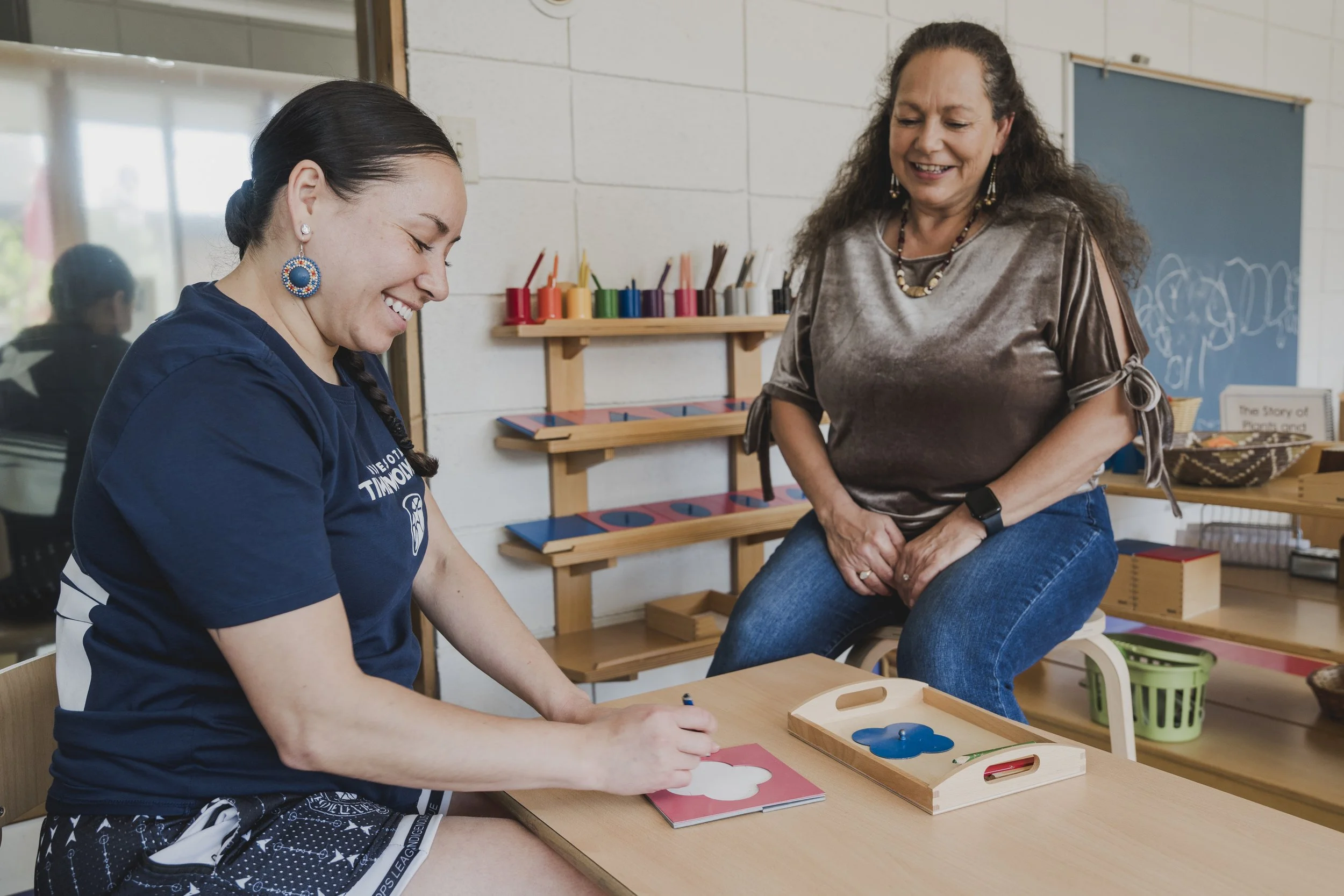
Janice and Brook in the classroom
Your passion for revitalizing culture and supporting indigenous artists is central to your work. How does MAICC foster this creativity and community empowerment?
Brook LaFloe: Developing Indigenous Montessori materials is deeply personal—it’s about creating tools that reflect who we are. Montessori encourages hands-on, child-sized, culturally relevant materials, many of which we made ourselves. I’ve been sewing and making traditional items like regalia since high school, and those skills carried through my Montessori training when I made my first topponcino
During the pandemic, I co-founded Niniijaanis One of Ones, a social enterprise for Indigenous children and artist collective. We focused on creating and sharing handmade Indigenous Montessori materials with families. This helped keep learning accessible and culturally grounded during school closures.
The Collective also uplifts Native artists, who sell their work while helping fund free materials for children. Our families can create their own ribbon skirts, shirts, and drums, as cultural gifts at graduation to share with their children. As someone from a family of artists, I believe art preserves our stories and identities—supporting artists helps sustain culture for the next generation.
How does your background in story education, birth-three years and three -six years influence the learning environments you help create at the center?
Brook LaFloe: Our current Montessori classroom serves children ages three to six—the Children's House—because that’s where the need in our community is greatest. We plan to open a second classroom for the same age group soon. From the beginning, however, we recognized the gap in services for Native families with children under age three. That’s why I pursued toddler training, along with other staff members, as part of our long-term goal to open a toddler classroom by 2026. We’re actively recruiting more toddler-trained teachers to meet AMI standards and expand early access for our families.
Maintaining fidelity to the international Montessori model through AMI diplomas is essential to us, but just as critical is ensuring representation—we are especially seeking Native-identifying candidates. Our vision is to be the premier early learning model for American Indian children, grounded in both high-quality education and cultural identity.
My personal goal is for children who stay with us for a full three-year cycle to leave reading. Literacy is foundational—especially for Black and Brown children—and early success leads to stronger long-term outcomes. Beyond academics, I dream of a future where our students speak Ojibwe and Lakota fluently. Language is core to identity, and while it’s harder to learn as an adult, the language we learn in childhood stays with us. I hope this next generation surpasses us in fluency, grounded in both their language and culture.
How do your family ties and shared vision as mother and daughter shape the leadership dynamic at MAICC?
Janice LaFloe: Someday I would like to retire and I'd like to be able to know that Brook has developed all of the skill sets that's going to be necessary. So really she's my legacy. I think of the Montessori work and the indigenous Montessori approach as our best healing opportunity for our children and our future generations. So it really is, I've got the bigger vision, long-term vision. My living legacy.
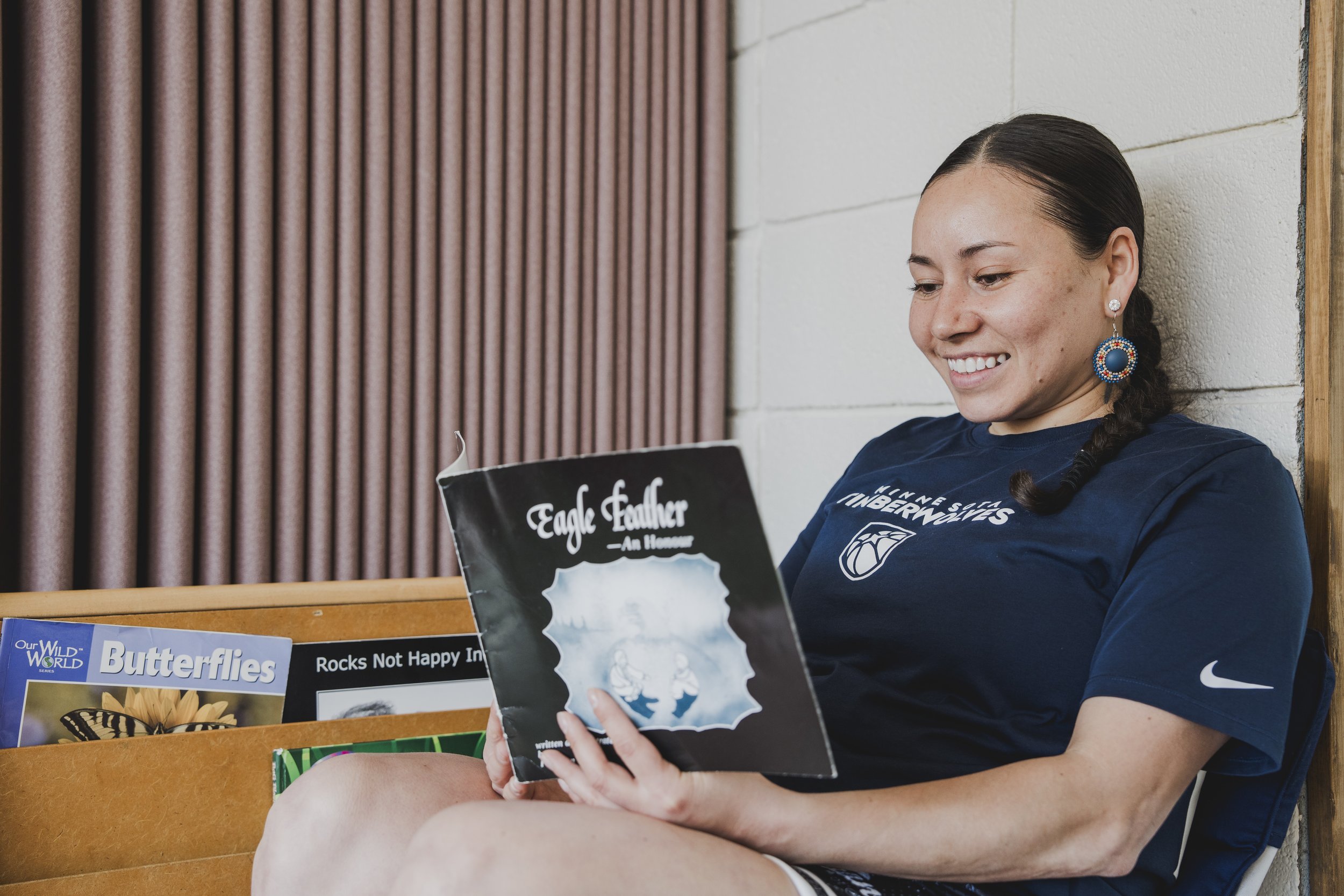
Brook LaFloe in the classroom
“Someday I would like to retire and I’d like to be able to know that Brook has developed all of the skill sets that’s going to be necessary. So really she’s my legacy. I think of the Montessori work and the indigenous Montessori approach as our best healing opportunity for our children and our future generations. So it really is, I’ve got the bigger vision, long-term vision. My living legacy. ”
Brook LaFloe: Before colonization, families passed down skills to their children, with roles often shaped by clan systems. Children would inherit and carry forward the gifts of their parents—whether as artists, leaders, or educators—contributing to the community through intergenerational knowledge.
Today, that tradition can be misinterpreted as nepotism, but it’s actually a continuation of a cultural value: preparing the next generation to step into our roles. It’s about sustaining community, not favoritism. I’m incredibly qualified to take over my mother’s work. In my own family, I see that reflected—my brothers took after our dad in physical labor, while I followed my mom’s path in education and Montessori. I work with my hands too, and in that way, I carry both of their legacies forward.

The Montessori American Indian Childcare Center team
How can others, whether educators, families or supporters, get involved or support the work you're doing?
Brook LaFloe: First and foremost, you can certainly share your little ones with us in the classroom by enrolling your child(ren). If you can't share your little one or don't have little ones, you could certainly support us financially through donations. We also take school supplies & arts donations. Lastly, one can always volunteer time and expertise as a person. Advocating to the public & education systems continuing to promote the importance of early learning is also very important. Get involved, stay involved as much as you'd like. There's many ways to support us.
